Ancestral Wisdom
What Is Ayahuasca? Sacred Does Not Mean Risk-Free
The most important part of the Ayahuasca conversation is not the vision. It is the context, the care and what happens afterward.
By Bluestone Retreats4 min read
The short answer
Ayahuasca is a psychoactive plant preparation associated with diverse Amazonian traditions. Calling it sacred medicine describes a cultural or spiritual relationship, not proof that it is safe for everyone or an established medical treatment.
01Tradition and clinical evidence answer different questions. Neither should erase the other.
02Natural does not mean harmless. Health history and medication interactions matter.
03A dramatic experience is not a measure of healing. Consent, boundaries and ongoing support matter more than promises.
What is Ayahuasca, exactly?
Ayahuasca is commonly described as a psychoactive brew made from the Banisteriopsis caapi vine and a DMT-containing plant, often Psychotria viridis, also called Chacruna. Preparations differ across communities and contexts. The vine contains harmala alkaloids that inhibit monoamine oxidase, affecting how DMT and other substances are metabolized. This helps explain both its psychoactive effects and why interactions deserve serious attention.
The word Ayahuasca can refer to the vine as well as the preparation. There is no single universal recipe, experience or tradition. Treating every preparation as interchangeable hides meaningful differences in composition, cultural practice and risk.
Sources:Cleveland Clinic | 2024White and colleagues | International Journal of Toxicology | 2024
Why is it called sacred medicine?
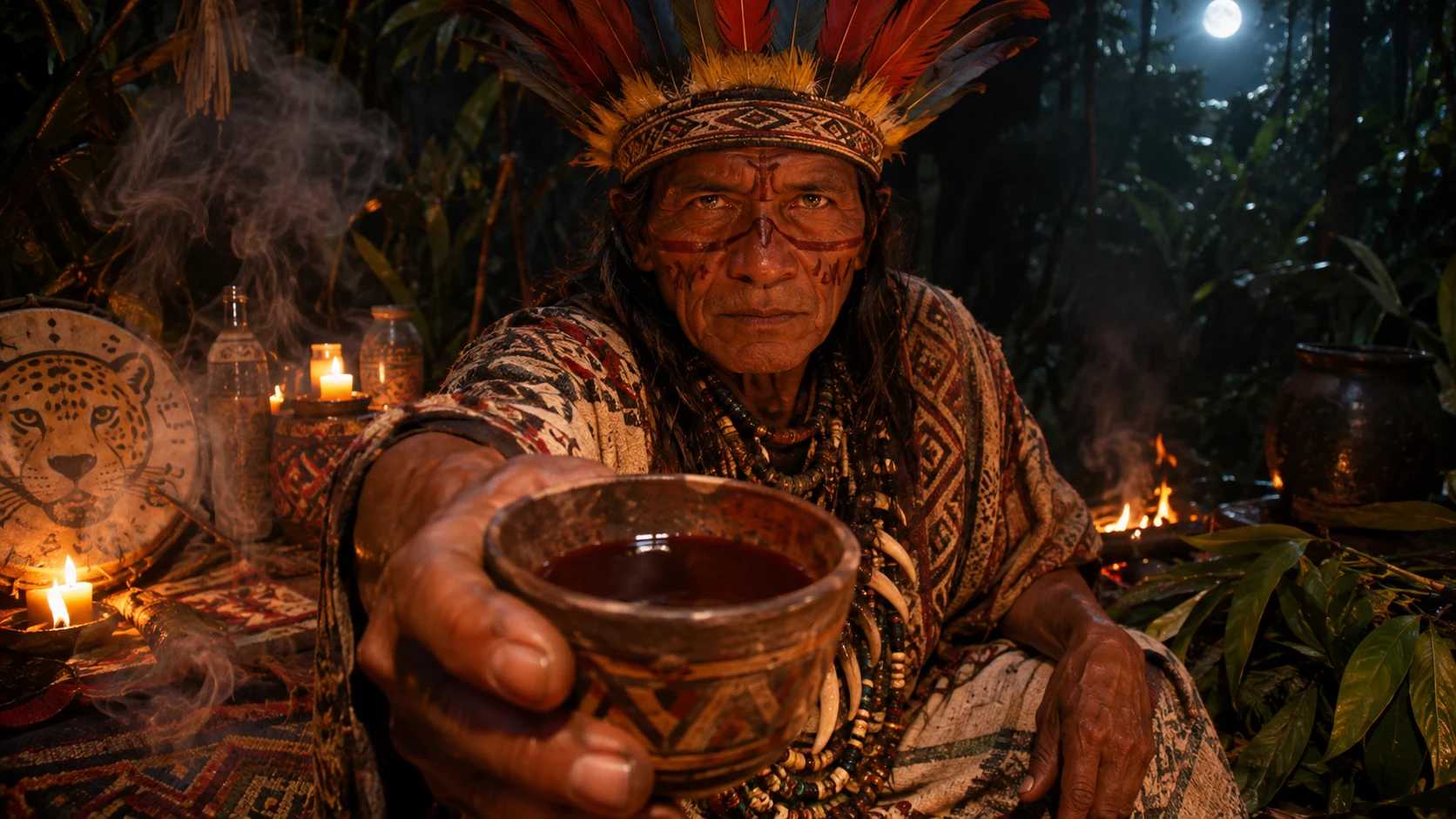
For many Amazonian communities, Ayahuasca exists within relationships among plants, people, land and spiritual life. Sacred medicine can carry meanings beyond a Western clinical definition of treatment. Respect begins by recognizing living traditions, not a single story that a retreat can claim to own.
Reverence carries responsibility: acknowledging the people who hold these traditions, asking where knowledge and plants come from, and resisting the idea that an Indigenous practice becomes valuable only when science studies it. Spiritual meaning cannot establish medical safety or justify a promise of recovery.
At Bluestone, Ancestral Wisdom and intention are spiritual context. Sacred geometry, frequency and the language of the Three Kingdoms are not evidence of medical efficacy. A respectful account makes room for meaning without presenting belief as a scientific finding.
Sources:Cleveland Clinic | 2024
The experience is not the same as the outcome
People describe changes in perception, powerful emotions, imagery and altered senses of time or self. Difficult experiences can occur too. Nausea, vomiting and cardiovascular changes are reported in the literature. None of these experiences, including vomiting, proves that toxins or trauma have left the body.
A compelling account online may be sincere, but it is still one person's account. It cannot tell you what will happen to you. Comparing yourself with someone else's dramatic story can create pressure to interpret every feeling as a breakthrough, or disappointment when nothing resembles the story you expected.
Intention is different from demanding a particular result. Reflection can begin with a simple question: what deserves more honesty or attention in my life? That question remains useful whether or not someone ever participates in a ceremony.
Sources:White and colleagues | International Journal of Toxicology | 2024
Read about intentions versus expectations →What does research actually show?
Ayahuasca has been studied in relation to mental health, including depression. A randomized placebo-controlled trial involving 29 people with treatment-resistant depression reported differences in depression scores during short-term follow-up. This is a research finding in a selected clinical population, not proof that a retreat treats depression or that the same result will occur elsewhere.
Small samples, short follow-up periods, variation between preparations and challenges maintaining blinding limit what can be concluded. Observational studies cannot easily separate the effects of the preparation from expectations, community, supportive surroundings or other influences.
The honest conclusion is neither a miracle claim nor a dismissal of people's experiences. The evidence is developing. Research findings should not become guarantees, a reason to abandon established care, or an assurance that a ceremony is appropriate for someone with a health condition.
Sources:Palhano-Fontes and colleagues | Psychological Medicine | 2019White and colleagues | International Journal of Toxicology | 2024
Natural does not mean safe for everyone
Ayahuasca can interact dangerously with medications and other substances. Its effects on monoamine oxidase make medication review especially important. Cardiovascular conditions, psychiatric history and pregnancy are among concerns requiring qualified medical attention. This article is not a complete list of contraindications and cannot determine personal suitability.
Never stop, reduce or change prescribed medication to make yourself eligible for an experience. A facilitator's reassurance is not a substitute for advice from your prescribing clinician. A responsible discussion includes health history, medications, supplements, recent substance use, and what happens if support or emergency care is needed.
Consent is ongoing. No one should be pressured to participate, disclose private experiences publicly, accept unwanted touch, or treat a facilitator as an unquestionable authority. Screening cannot remove every risk. Laws differ by jurisdiction, and calling something sacred does not establish legality.
Sources:Cleveland Clinic | 2024White and colleagues | International Journal of Toxicology | 2024
Read the safety, confidentiality and consent policies →Six questions worth asking before trusting any claim
Clear answers are more valuable than mystical language or urgency. These questions help evaluate information without assuming participation is the right next step.
- Who holds the knowledge being described, and how are their traditions acknowledged?
- Are spiritual beliefs clearly separated from medical and scientific claims?
- Who reviews health history and medication interactions, and what are their qualifications?
- How are consent, privacy, boundaries and the right to decline protected?
- What support and emergency arrangements exist, and what are their limitations?
- What support is available afterward, without promising a specific result?
The quieter work happens afterward
Integration means reflecting on an experience and considering how, or whether, its meaning belongs in everyday life. It is not proof that every insight is true. Rest, ordinary routines and thoughtful conversation can provide space before making major decisions.
Persistent distress, confusion, sleep disruption or feeling unsafe deserves attention from a qualified health professional, not an instruction to push through. Immediate danger requires emergency help. Spiritual language should never explain away a need for care.
Sacredness does not have to look spectacular. It can look like honest questions, respect for boundaries, or the decision not to participate. A grounded account of Ayahuasca leaves room for all of those possibilities.
Common questions
Research & further reading
Cleveland Clinic | 2024
Ayahuasca: What You Need To KnowAccessible clinical overview of cultural context, effects and risks.
Palhano-Fontes and colleagues | Psychological Medicine | 2019
Randomized placebo-controlled trial in treatment-resistant depressionA 29-person trial with short-term follow-up, not evidence that retreats provide depression treatment.
White and colleagues | International Journal of Toxicology | 2024
Ayahuasca and DMT adverse events and toxicity: systematic thematic reviewReview of adverse events, interactions and limitations across varied types of evidence.